
From data to
decisions, turning
insights into impact
Beyond the Pitch — Issue #6
Today’s article is inspired by a request from a good friend of mine, Winnie Auma Otieno, following her request in my last issue.
If you’ve been in sales long enough, you know this situation all too well:
You’ve had a great meeting.
You’ve understood the need.
You’ve submitted a strong, competitive proposal.
You’ve aligned on terms.
And then…
Silence.
No feedback. No update. No closure.
Just silence.
And in that silence, your mind starts racing:
Did they go with someone else?
Was I too expensive?
Did I miss something?
Am I even good at this?
This is not a good place to be.
I know because I’ve been there more times than I can count.
But here’s the first truth we need to accept:
It might have nothing to do with you.
Sometimes, it’s simply the nature of the game.
You win some.
You lose some.
And sometimes… you just don’t know.
There are many reasons why a deal might suddenly go silent.
Your proposal could be used as a benchmark to negotiate with another supplier.
The client could be navigating internal procurement procedures.
Budgets may have shifted.
Priorities may have changed.
Decision-makers may be unavailable.
Or simply - your deal has moved into a phase where you are no longer in control.
And that’s where most salespeople struggle, because silence creates uncertainty.
And uncertainty creates anxiety.
But the real issue is often not the silence itself.
It’s what happened before the silence.
One of the most important concepts that changed how I approach sales is The Buying Cycle.
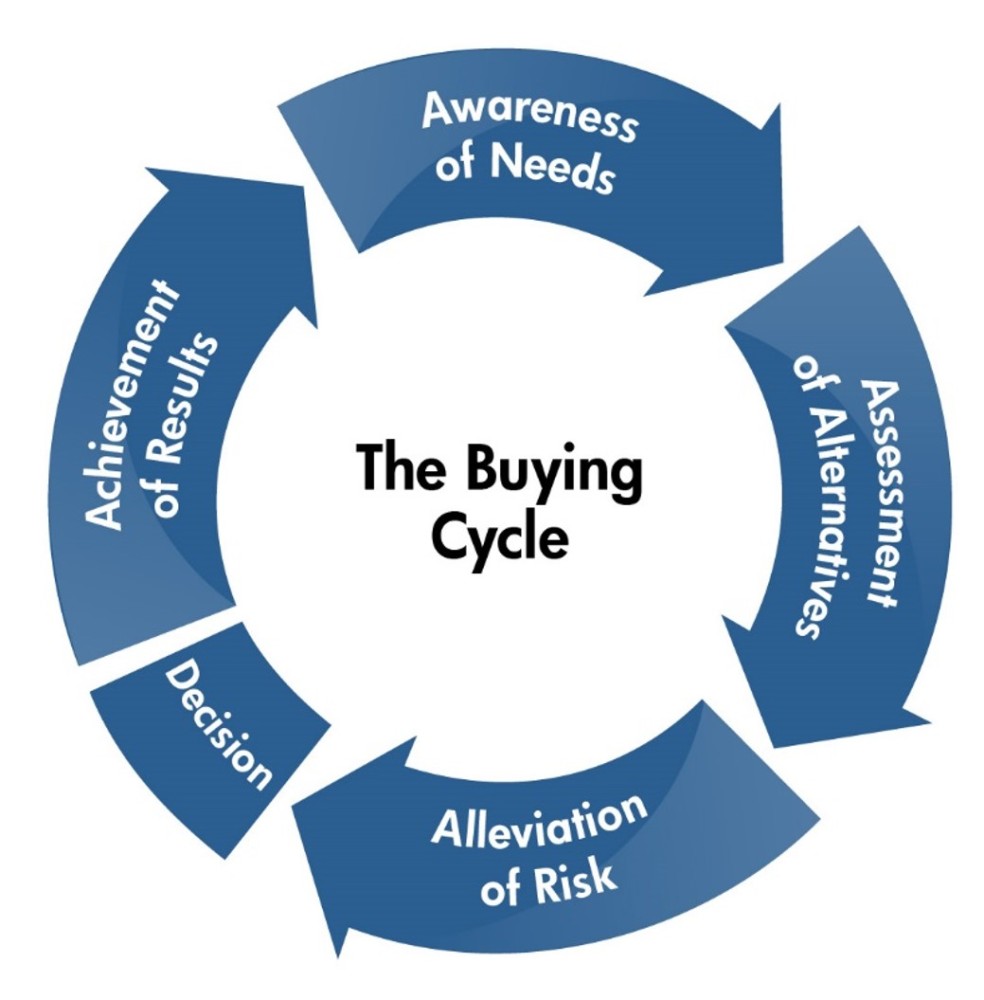
Every buyer, whether consciously or not, moves through a series of stages before making a decision:
1. Awareness of Needs
This is where the customer realises there is a problem to solve or an opportunity to pursue. If you are involved at this stage, you have a powerful advantage and you can help shape how the problem is defined.
2. Assessment of Alternatives
At this stage, the customer begins exploring options. Competitors enter the picture. Comparisons begin. If this is your first point of engagement, you are already playing catch-up.
3. Alleviation of Risk
Now the focus shifts from “Which solution is best?” to “What could go wrong?” Concerns around cost, implementation, reliability, and internal approvals become dominant.
4. Decision
A choice is made, but not always communicated immediately. Internal alignment may still be ongoing.
5. Achievement of Results
The solution is implemented, and the original need is addressed (or not).
Here’s the key insight:
The earlier you enter the buying cycle, the higher your chances of winning.
When you engage late - especially at the quotation stage - you are often reduced to a number on a spreadsheet.
And numbers are easy to compare. And easy to replace.
Another critical piece that many overlook is understanding the decision-making structure.
Who initiates the need?
Who evaluates options?
Who approves budgets?
Who has the final say?
Without this clarity, you’re navigating blind.
Stakeholder mapping is not optional in sales, it is essential.
Deals don’t just get approved, they get influenced.
And influence requires visibility.
And Yet… Silence Might Still Happen
Even when you do everything right.
That’s the reality of sales.
So what do you do then?
When I reach that point (where follow-ups go unanswered and momentum is gone) I send what I call a break-up email.
A simple, respectful message that acknowledges the silence and gives the customer an easy way to respond.
Something along the lines of:
“I haven’t heard back from you, and I assume priorities may have shifted. If this is no longer a focus, that’s completely fine - just let me know so I can close this on my end.”
Interestingly, about 70% of the time, this gets a response.
Why?
Because it removes pressure.
It creates clarity.
It invites honesty.
And sometimes, that’s all you need - not to win the deal, but to regain control of your time and energy.
As I close this, know that silence in sales is uncomfortable, but it’s also instructive.
It teaches you where you entered the process.
How well you understood the buyer.
And how effectively you managed the journey.
Not every deal will close.
But every deal will teach you something if you pay attention.
If this resonated with you, I invite you to subscribe to Beyond the Pitch so you don’t miss the next issue.
And if there’s a topic you’d like me to explore around Sales, Leadership, or Customer Experience, drop it in the comments - I may just feature it next.
Until next time, Stay patient, stay sharp… and don’t fear the silence.
Salam!
Latest News